
Hospitals and medical facilities need fire and life safety work that respects patient care, access restrictions and the pace of an active clinical environment.
SuperHero Fire Protection provides inspections, testing, repairs and documentation through local teams serving complex commercial facilities.
Access may be limited. Some areas require advance coordination. Maintenance teams already manage dense schedules and multiple contractors.
SuperHero works with facility teams to coordinate access, scheduling, and service communication around the needs of the property.
Coordinate service around patient rooms, treatment spaces, and public areas.
Plan entry into restricted or sensitive parts of the facility.
Align inspection and service work with operations and maintenance teams.
Make sure the right people know where technicians are working and what comes next.
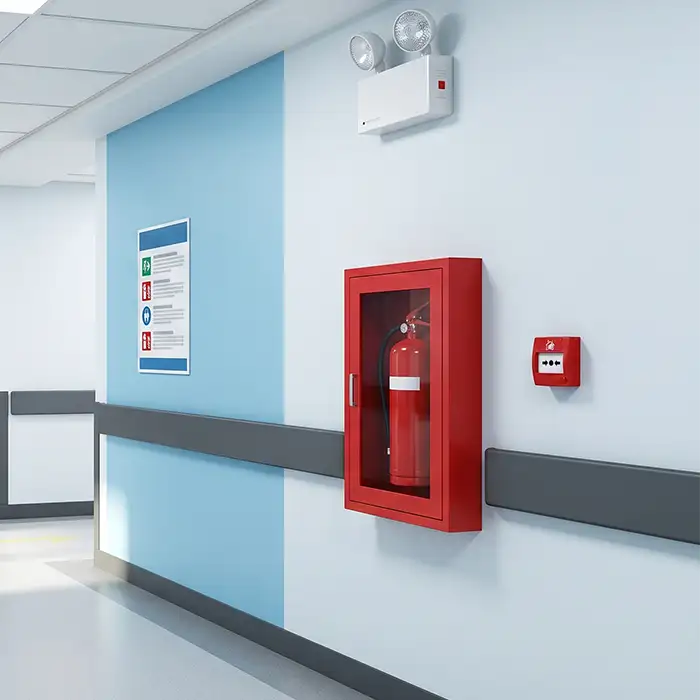
SuperHero organizes recurring inspection work across the systems in scope and gives facility teams a clearer view of completed work, open findings and upcoming needs.
Coordinate recurring work across departments, buildings, and system types.
Complete required testing for the equipment included in the inspection scope.
Maintain documentation that facility teams can review and retain.
Connect identified issues to the repair or service work that follows.
Facility teams work with SuperHero through one relationship for more of the inspection and service work.
Recurring inspection, testing and service for sprinkler systems throughout the property.
Inspection, testing, and troubleshooting for alarm systems serving hospitals and medical facilities.
Inspection and service for extinguishers placed across patient care, support, and administrative areas.
Testing and service for hydrants serving hospital campuses and medical complexes.
Testing and corrective service for backflow assemblies tied to fire protection systems.
Testing and service for emergency responder radio coverage inside complex buildings.
SuperHero documents completed work, identifies open issues, and keeps service history tied to the correct building and system.
Maintain a clear account of inspections, tests, and completed work.
Show what was found and where it was identified.
Keep corrective work connected to the original finding.
Separate records by campus, building, and system.
Inspection and service planning can account for facility contacts, access requirements, and operating schedules.
Identify access, timing, and facility contacts before work begins.
Account for occupied spaces, staff movement, and facility schedules.
Share findings with the designated facility contact.
Carry open findings into the next service step without losing context.
SuperHero provides a more consistent service model while local field teams handle the work at each property.
Organize inspection and service activity across several buildings.
Keep documentation tied to the right facility and system.
Use teams based near the properties they serve.
Standardize service expectations across regional or national operations.
Those changes can affect inspection scope, system coverage and service access.
SuperHero works with facility teams to review the fire and life safety needs tied to the project.
Review system needs when clinical or support areas change use.
Coordinate alarm, sprinkler, and low-voltage work with construction activity.
Address new system and inspection requirements as the campus grows.
Confirm that completed work performs as intended.

Twin City Sprinkler
Winston-Salem, NC
KNC Technologies
Winston-Salem, NC
Healthcare service works better when technicians understand the property, the access process, and the people responsible for day-to-day operations.
SuperHero’s regional network connects healthcare organizations with local service teams and broader Enterprise support when needs extend across markets.

Healthcare properties may include fire alarms, sprinklers, extinguishers, private hydrants, backflow preventers, emergency responder radio systems, and other life safety equipment based on the building and campus.
Inspection frequency varies by system, equipment, and governing requirements. A healthcare facility may have several inspection and testing cycles running at the same time.
Yes. Scheduling can account for access restrictions, occupied areas, and facility operations. Property teams should identify the appropriate contacts, access requirements, and timing before work begins.
Clear records show what was inspected, what was found, and what follow-up was completed. Facility teams may need that information for internal oversight, audits and ongoing service planning.
Yes. SuperHero works across multiple fire and life safety systems, giving facility teams one relationship for more of the recurring inspection and service work.
Yes. Healthcare organizations with multiple properties can use SuperHero’s Enterprise model to coordinate service across markets.
Yes. Healthcare facilities subject to Joint Commission oversight need clear records of inspections, findings, and corrective work. SuperHero documents completed work and keeps service history tied to the correct building and system.
Connect with a SuperHero team to plan inspections and service around the needs of your healthcare operation.